Rainbow Ridge Steiner School
Philosophy
Rudolf Steiner was a philosopher born in Austria at the turn of the century who developed a body of knowledge known as Anthrposophy or Spiritual Science.
Anthroposophy is concerned primarily with the human evolution but extends to many fields such as medicine,agriculture, the arts, architecture and education.
Steiner education is based on the eductional principles of Rudolf Steiner. Steiner education aims to help children become balanced adults who can use their faculties of thinking, feeling and willing (or their heads, hearts and hands) in an integrated way.
This education practice is aimed at nurturing children through imaginative experiences, which resonate in their souls.
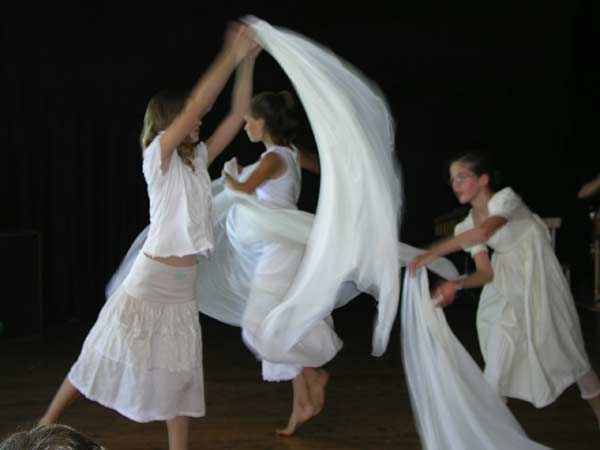
Steiner believed human development unfolded in 7 year phases and that each year is based on a GENEARTIVE IMPULSE. (SEE CLASS ONE etc.)
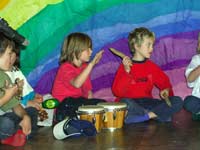
During the first phase (the willing phase) from birth to age 7, sees the formation of the child's physical body and the development of the will are paramount. This is the stage at which children live through their hands and the Kindergarten child learns by doing.
The children learn about themselves, each other and the world around them by
engaging in creative play, music, dance, art craft and domestic crafts such baking and cleaning.
 |
 |
 |
The regular routine and repetition help the children to develop self discipline in
a nurturing environment. Soft colours and natural materials surround the
children in beauty and inspire their creativity.
The second phase (the feeling phase) 7-14 years is when the heart and lungs harmonise. Their rythmic system is developing in conjunction with their feeling life. Subjects are delivered in a creative and integrated way through the teachers imaginative life. The chidren develop a sense of everything being connected to the whole. A belief in truth, beauty and goodness and a connection to the world is paramount.
The third phase (the thinking phase) from adolescence to adulthood, sees the young person developing their intellect and dwelling more predominantly in their heads.
Drawing upon self discipline and artistic sensitivity. The emphasis is now on
developing powers of reasoning and judgement.
At the core of Steiner's principles is the belief that true education must
encompass the whole child within the contxt of human development.
It is aimed at their spiritual, emotional, intellectual and physical development
in a harmonious and balanced way.